The B-League Bets Everything on Brand
Japan's top basketball league now admits clubs on crowds, revenue and arenas, not wins. A team can lose and survive. A team nobody cares about cannot.
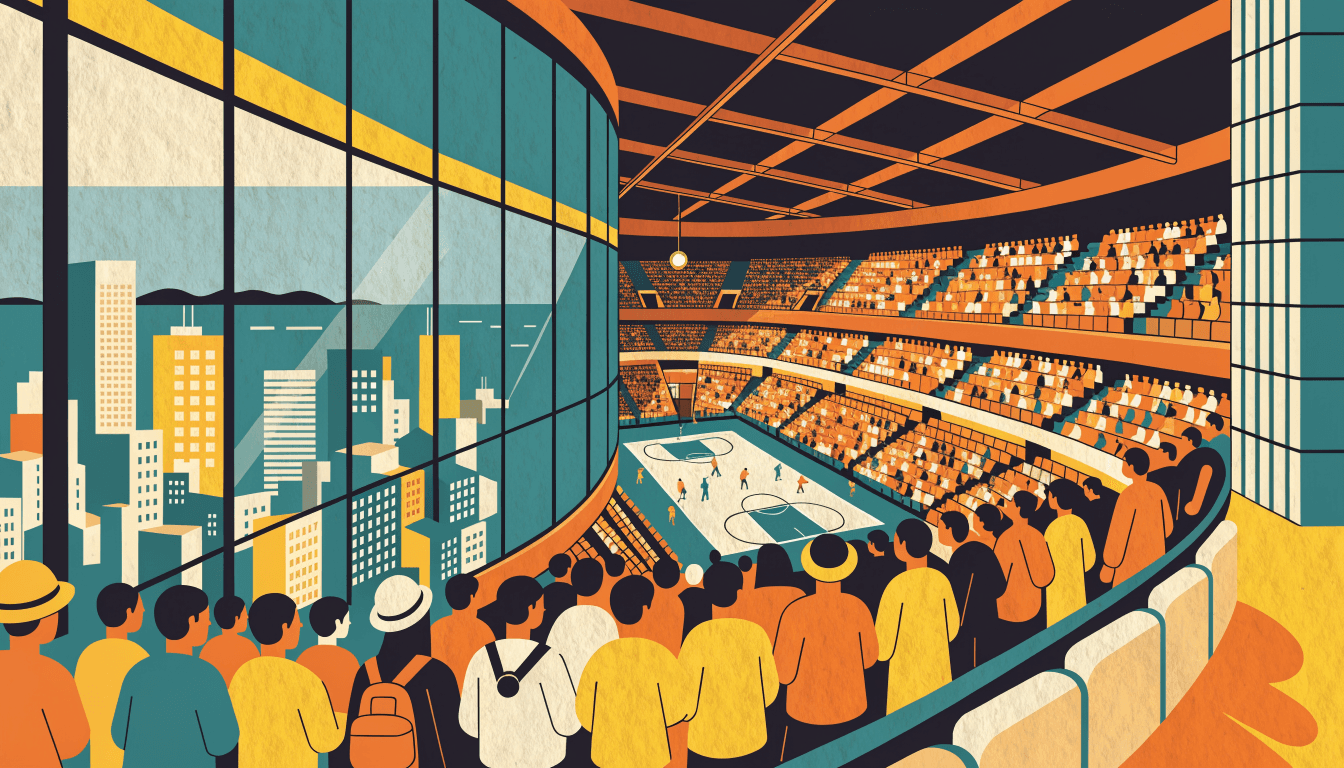
Japanese pro basketball has stopped asking clubs how many games they win and started asking how many people they move. When the 2026-27 season tipped off on September 22, 2026, Alvark Tokyo and the Ryukyu Golden Kings replayed the matchup that opened the league in 2016. Almost everything around that game was new.
The top division is now B.League Premier: 26 clubs, with no one going up or down on results. Entry was earned in the boardroom, not on the court. A club got in by proving it could fill an arena, sell tickets and earn revenue at a set level.
I have spent my career in luxury and premium retail, where the product matters but desirability decides who lasts. Reading the new rules, I was struck by how closely the league has moved toward the same logic. A team can now lose and survive. A team that cannot build a following, a reason for people to show up, buy a jersey and sign a sponsorship, cannot. In the new B-League, brand is no longer marketing. It is the license to exist.
What changed this season
The league calls the overhaul B.Kakushin, or "B.Innovation." It replaced a results-based ladder with a business-based one.
| Through 2025-26 | From 2026-27 | |
|---|---|---|
| Divisions | B1, B2, B3: 55 clubs in 41 prefectures | Premier (26 clubs), One (25), Next (4) |
| How a club reaches the top | Win enough games to be promoted | Average 4,000 fans a game, earn ¥1.2 billion a year, play in a 5,000+ seat arena |
| Going up or down | Promotion and relegation on results | None on results; tiers set by business numbers, reviewed every year |
| Team payroll | No limit | ¥500 million floor, ¥800 million cap |
| Foreign players on court at once | 2 | 3 |
| How young Japanese players join | Free signing | Draft, first held January 29, 2026 |
| Postseason | Championship, best-of-3 final | Playoffs, 8 teams, best-of-5 final; winner's prize doubled to ¥100 million |
The draft got off to a slow start. Only 11 players were picked across 23 participating clubs. Many clubs found the fixed rookie salary too rich, about ¥10 million a year for later-round picks. In August, chairman Shinji Shimada said the league may loosen those terms before the second draft on January 28, 2027.
The salary cap is meant to stop the richest clubs from simply buying titles. It also shifts the competition. If no one can outspend everyone else on players, clubs have to win the contest for fans, sponsors and attention.
Why brand is now a matter of survival
Look closely at the three Premier tests and each one measures brand, not basketball.
- 4,000 fans a game is a loyalty test. People come back 30 games a season only if the club means something to them.
- ¥1.2 billion in revenue is a demand test. Tickets, sponsorships, jerseys and broadcast money all rise and fall with how much people care.
- A 5,000-seat arena is a trust test. Cities and companies only build or back an arena for a club they believe will fill it for decades.
The money already follows the brands. Utsunomiya Brex, the 2024-25 champion, passed ¥3 billion in revenue for the first time that season, up 32%, with ticket sales alone over ¥1 billion. Shimada has said the whole league is still about half the size of the J.League, Japan's soccer league. That gap is the prize.
The flip side is unforgiving. Kumamoto Volters, a second-division club, could not secure a large enough arena in time and gave up on joining the Premier in year one. It is now aiming for 2030 at the earliest.
Getting in is not the end of the test. Every Premier club's license is reviewed each year. A club that falls short of the revenue bar keeps its place for now but can be sanctioned, with fines of up to ¥50 million. Three years in a row below it and the license is not renewed, so the club drops to B.League One. The 4,000-fan average carries the same three-strikes rule. Relegation has not disappeared. It has moved from the scoreboard to the business numbers.
The new rules also remove two old excuses. With no relegation on results, a club cannot blame a bad season for a drop in crowds. With a salary cap, a club cannot outspend its way out of a weak identity. What is left is the hard work of being a club people choose.
That audience is also different from Japan's other big leagues. B-League fans skew toward people in their 20s to 40s, with a higher share of young women than other pro sports. They come for the whole game-day experience, not just the box score. That rewards clubs that think like entertainment brands, and, as I will argue in this series, like luxury houses.
What a strong club brand looks like
The clubs pulling ahead sell a day out, a place and a habit, not just a game. Four examples show the range.
Chiba Jets: own the room. No club shows the power of a home better. When the Jets moved into their own arena, crowds more than doubled almost overnight and stayed there. The arena also turned the Jets into the league's biggest business. In 2024-25 they became the first B-League club to pass ¥5 billion in revenue.
Alvark Tokyo: own a routine. In its second season at TOYOTA ARENA TOKYO, Alvark is courting the office workers around Toyosu, Ariake and Odaiba. The pitch is simple: stop by after work and watch with a beer in hand. Its Opening Week ran with two nearby malls, with player appearances, a five-stop stamp rally and public viewings. Alvark drew a club-record 257,803 fans to regular-season home games last season, up about 26%. The club says its next job is turning first-timers into regulars.
Saga Ballooners: own a region. Saga is one of Japan's least-populated prefectures. Yet its club averaged 5,753 fans a game last season, fifth of 26 top-flight clubs. In 2019-20, as a third-division team playing in small local gyms, it averaged about 400. A new arena helped, but the arena only filled because the club became the prefecture's team.
Ryukyu Golden Kings: own an identity. The Kings carry Okinawa with them. For the season opener in Tokyo, a large traveling crowd came from Okinawa and across Japan to cheer an away game. A fan base that travels is a brand that can sell anywhere.
The common thread: none of these clubs waited for wins to bring people in. They gave people a reason to come first. In luxury we would say they built desire before they asked for the sale.
The risks
The brand race has winners, and it will have casualties. Four risks stand out.
- Growth is getting expensive. Top two-division revenue rose by about ¥9.9 billion in 2024-25, to roughly ¥65.1 billion. In the same season, the number of loss-making clubs tripled, from 5 to 15. Arenas, staff and game-day production cost money before they earn it back.
- A two-speed league. Premier clubs have the big arenas and the big sponsors. The 25 clubs in B.League One cannot climb by winning, only by growing their business. For a city without an arena plan, the ceiling is now visible.
- Fewer minutes for Japanese players. Allowing three foreign players on court at once should raise the level of play. Some Japanese players worry it will cut their minutes. Fans often bond with local heroes, so clubs that lean too hard on imports may win games and lose hearts.
- Copy-paste game days. Light shows, DJs and mascots are now standard. If every club runs the same playbook, none of them stands out. A brand has to say something only that club can say: about its city, its history, its people.
What it means for players and the pipeline
Brand thinking does not stop at the club. It now runs all the way down to the players and the programs that develop them.
The draft is the clearest sign. A university player picked in the third round or later signs a two-year deal at about ¥10 million a year. Clubs passed on most of the pool in January because that price only makes sense for a player they already know well. Before the next draft in January 2027, clubs will want more film, more stats and more proof.
That raises the bar for everyone below the pros. A high school or university player who is hard to find is easy to skip. One with a track record clubs can watch and measure has a real shot.
It also changes what clubs want from young players. A homegrown player from the region is more than a roster spot. That player is a story the club can sell, a face on the poster and a reason for local families to buy tickets. In a league where crowds decide who survives, the pipeline from local gyms to the home arena is part of the brand.
The takeaway
In ten seasons the B-League grew its crowds about two and a half times, from roughly 2.24 million in its first season to a record 5.48 million fans in 2025-26. It did that largely the old way, with promotion races and survival battles.
Those are gone. From here, a club's future rests on one question: do enough people care? Wins still help. But the clubs that will thrive in the Premier era are the ones that give people a reason to show up before the first tip, and to come back after a loss.
In the new B-League, the scoreboard decides who wins on game day. The brand decides who is still playing in ten years.
Coming next
If brand is now the license to exist, clubs need a way to manage it with the same discipline they bring to the salary cap. Luxury has one. In Part 2, I look at brand equity as a balance sheet account, with deposits and withdrawals, and at which everyday club decisions quietly draw it down. The answer starts with something many clubs will be tempted to do this season: give tickets away.
Sources
- B.League 2026-27 season overview, Japanese Wikipedia
- B.League 2026-27 season page, B.League official site
- B.Kakushin entry criteria and league scale, SBBIT, May 8, 2025
- Editorial on the Premier opening: salary cap and foreign-player rule, Hokkaido Shimbun, September 24, 2026
- Record 5.48 million attendance in 2025-26, Kyodo via Kumamoto Nichinichi, June 30, 2026
- Ten seasons of B.League attendance, about 2.5 times the first season, Basketball King, July 18, 2026
- Draft results and possible rookie-pay changes, Kyodo via Kumamoto Nichinichi, August 18, 2026
- Draft date and salary floor and cap, Gendai Business
- 2024-25 club revenue and loss-making clubs, Kyodo via Akita Sakigake, October 14, 2025
- Utsunomiya passes ¥3 billion in revenue, Daily Sports, September 11, 2025
- Chiba Jets 2025-26 attendance record, Chiba Jets via PR TIMES, May 7, 2026
- Alvark Tokyo's Premier opening campaign, AdverTimes, October 2, 2026
- Saga Ballooners attendance growth and 2025-26 ranking, Saga Prefecture
- Ryukyu Golden Kings on traveling fans at the opener, Ryukyu Golden Kings via PR TIMES, September 25, 2026
- Opening-game result, Ryukyu Shimpo, September 22, 2026
- Kumamoto Volters delay Premier entry, Kumamoto Nichinichi, November 1, 2023
- B.PREMIER club license renewal rules for 2027-28 (Articles 20, 21 and 32), B.League, in force from August 22, 2024
Perspectives are signed opinion pieces. The views are the author's own.