A Ten-Year-Old League Needs a Heritage Strategy
Great brands need heritage, quality and innovation, all at once. The B-League already has a remarkable origin story. The work now is to protect it.
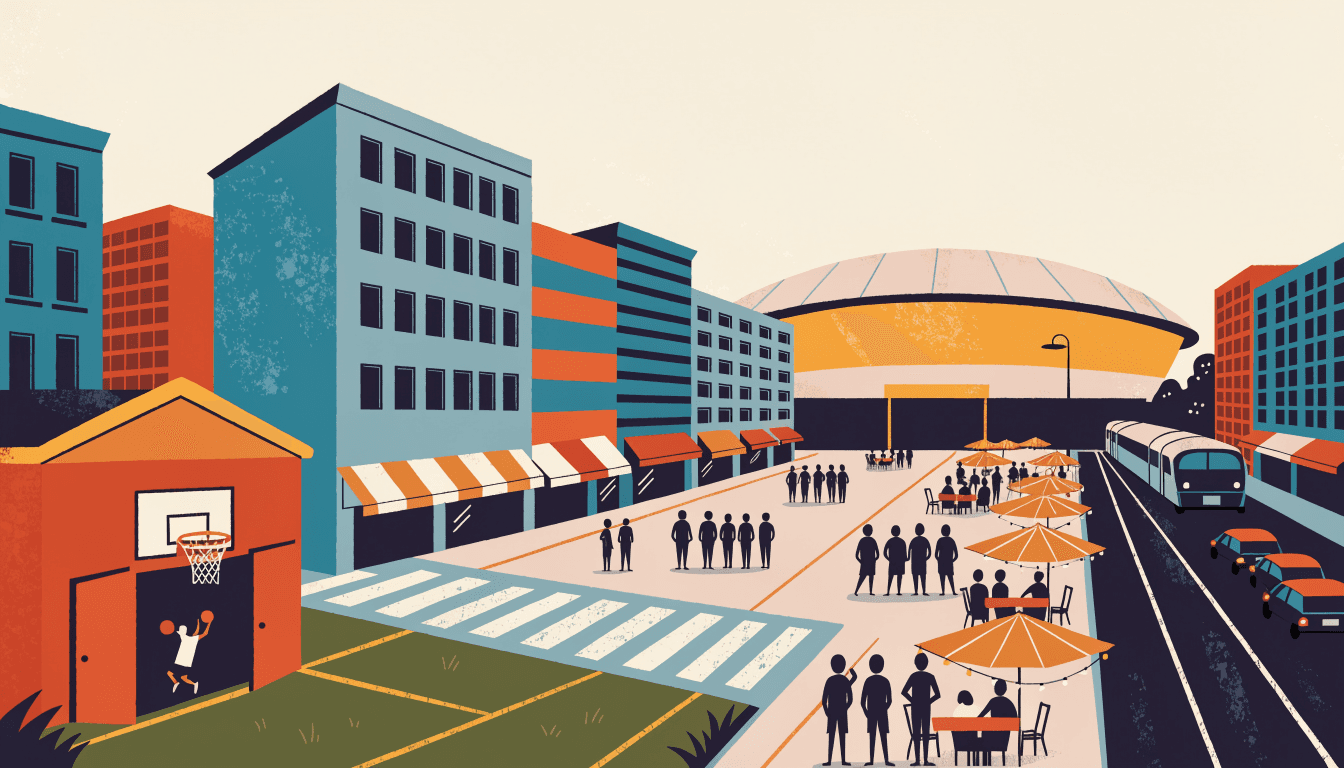
During my years at LVMH, Bernard Arnault spoke to our team about what makes truly great product. His point, as I remember it, was that it rests on three things: heritage, quality and innovation. And you need all three. Two out of three is not enough. In a 2001 Harvard Business Review interview he described the same paradox at the heart of the rare "star brands": they must be timeless and modern, fast-growing and highly profitable, all at the same time.
In Part 2 I described brand equity as an account built by deposits and drawn down by withdrawals. Arnault's three elements explain what the account is built on.
- Heritage is retained earnings. It is the accumulated balance of every promise kept, the reason a brand is taken seriously on the first day of something new.
- Quality is the audit. It confirms the balance is real. When the product disappoints, the books are restated downward, often sharply.
- Innovation is investment. It keeps the account earning interest. Without it, the balance does not collapse; it simply stops growing while tastes move on.
A century-old maison and a ten-year-old basketball league look like they have nothing in common. On this framework, they face exactly the same test. The difference is that the league has to build its heritage while everyone is watching.
Heritage: the story of why you exist
Many of the young brands I advise assume the heritage part of the framework does not apply to them, because they have no archive. I see it differently. A new brand cannot have antiquity, but it can have origin. Its heritage is the story of its motivation: why it started, what it refused to compromise on, what it is for. Told truthfully, that story does for a new brand what history does for an old one. It is the opening balance of the account.
The Japanese designer Akira Minagawa founded the label now known as minä perhonen in 1995 with the stated aim of building a brand that would last at least a hundred years. That one intention shaped everything after it: original textiles, long relationships with mills, pieces made to be worn for years. Three decades on, the brand has a heritage, and it was built on purpose.
The league has a better origin story than it tells
The B-League's own origin is exactly this kind of story, and it deserves to be told more often. In November 2014 FIBA suspended the Japan Basketball Association, cutting Japan's national teams off from international competition. The main reason was that the country had two rival men's top leagues, the NBL and the bj league, and had failed to merge them. A task force chaired by Saburo Kawabuchi, the founding chairman of soccer's J.League, pushed through the reform, and FIBA lifted the suspension in August 2015.
The B-League opened on September 22, 2016, at Yoyogi National Gymnasium in Tokyo, with Alvark Tokyo beating the Ryukyu Golden Kings 80-75 in front of 9,132 fans, on a full-court LED floor. In seven years Japan went from suspended to co-hosting the 2023 FIBA World Cup in Okinawa, finishing as the best-placed Asian team and earning its first Olympic place on merit since 1976.
That is a heritage of motivation: a league born out of a crisis, built to prove that Japanese basketball could be unified, professional and worth watching. The league seems to know it. Opening the 2026-27 season with a replay of the 2016 matchup was a heritage move, turning a ten-year-old fixture into a ritual. More of that, please.
Every club needs its own origin
The same applies club by club. Some clubs carry decades of corporate-team history; others are barely older than the league. Either way, a fan should be able to say why the club exists in that city, and the answer should not change when the roster does. The Saga Ballooners' heritage is not ten years of results. It is the decision to be the whole prefecture's team.
Today's innovation becomes tomorrow's heritage
Much of what luxury now calls heritage began as innovation. In 1893 Kokichi Mikimoto produced the first semi-spherical cultured pearl, a breakthrough much of the jewelry trade first regarded with suspicion. Grand Seiko was launched in 1960 to prove a Japanese watchmaker could match the Swiss. Both founding ambitions are now part of what customers buy.
The LED court at Yoyogi, the first draft in January 2026, the first Premier season: these are the pearls of the B-League. In twenty years they will be its heritage, but only if the quality holds long enough for anyone to care.
Quality is the audit
For a young brand, quality is the evidence that the passion is real. Customers forgive a new brand for being small. They do not forgive it for being careless. An old house can survive a weak season on its balance; a new one has no such cushion.
In basketball, quality has two layers. The first is the game. Allowing three foreign players on court at once should lift the standard of play, and that is a genuine deposit. But quality in a fan's eyes also includes recognizing the people on the court. A team of excellent strangers can pass the technical audit and fail the emotional one.
The second layer is game day itself, and it has two levels of its own. The first is the basics: a smooth way in and a smooth way out. A family that spends forty minutes in line at the gate, or an hour trying to get out of the parking lot, has had its evening defined before the tip-off or after the final buzzer. Getting this right is not a deposit. It is the price of admission.
Game day also reaches well beyond the arena doors. The best venues sit inside a scene. In downtown Los Angeles, L.A. Live, the district AEG built beside what is now Crypto.com Arena, surrounds the building with restaurants, bars, live music venues, a cinema, hotels and broadcast studios. Fans arrive hours before tip-off, meet friends on the plaza, eat, and stay long after the final buzzer. The game is the anchor, but the whole day is the product, and the district earns from every hour of it. Japan's new arenas have the same opportunity. LaLa arena TOKYO-BAY now connects by bridge to the rebuilt LaLaport TOKYO-BAY shopping center next door, and Alvark Tokyo ran its opening week with two nearby malls. A club that thinks only about what happens inside its own walls is designing half of game day.
The second level is where loyalty is actually won. At Apple we called it surprise and delight: the moment that goes beyond what the customer expected and stays with them long after. Will Guidara, who led Eleven Madison Park in New York to the top of the world's restaurant rankings, makes the same case in Unreasonable Hospitality. Service is delivering what was promised; hospitality is how you make people feel, and the places people never forget are the ones that do something nobody asked them to. When his team overheard diners regretting that they had never eaten a New York street hot dog, someone went out to a cart, bought one and served it as a course.
For a club, the questions are simple and revealing. As a season-ticket holder or booster club member, are you made to feel special and personally acknowledged? Does anyone at the club know your name, notice that this is your tenth season, or remember that your daughter plays for the local junior high team? Is the club focused on how it wants fans to feel, or does it run on rules, with a sign for every prohibition and a script for every complaint? The real audit happens on the way home: on a first-timer's walk back to the station, on the drive home in their own car, or in the back of a taxi. If they would not come back, it does not matter how good the campaign was that brought them.
What happens when one is missing
Arnault's warning that two out of three is not enough applies to clubs with uncomfortable precision.
- Heritage without innovation becomes a museum. A club that leans on an old name or past titles, with the same tired game day every season, is respected and not wanted.
- Innovation without heritage becomes novelty. A light show copied from another arena draws a crowd once. With nothing underneath it, people move on.
- Heritage and innovation without quality is the most dangerous of all. A great city story and a clever campaign bring a first-timer through the door. A bad game day sends them home feeling misled, and the story starts to work against you.
Innovation is the investment, if it stays rooted
Louis Vuitton offers the clearest lesson on rooted innovation, with a strong Japanese thread. In 2003, under Marc Jacobs, the house invited Takashi Murakami to redraw its century-old monogram in a multicolored palette. The line ran for more than a decade and introduced the house to a generation that had seen the classic monogram as their parents' brand. It worked because the heritage was the canvas: the innovation made people look at the monogram again rather than replacing it.
Moncler did the same with its Genius project in 2018, inviting designers to reinterpret the down jacket the brand had made since 1952. Gucci shows the risk on the other side: after years of brilliant reinterpretation of its archive, the same codes appeared on so much product that revenue fell by more than a fifth in 2024. Innovation that stops being rooted becomes a withdrawal.
Basketball in Japan has cultural energy to borrow. The First Slam Dunk, released at the end of 2022, earned about ¥15.7 billion at the Japanese box office. Collaborations with anime, local makers, artists and food brands can all be deposits, as long as each one connects back to something the club already stands for. Alvark Tokyo's push to become the after-work habit for the office workers of Toyosu and Ariake is a good example: new, but rooted entirely in the club's place. The test for any collaboration is the Murakami test. Does it make people look again at who you are, or does it ask them to forget it?
The people who deliver it
Heritage, quality and innovation are decided in meeting rooms. They are delivered by people, thousands of times every game day. In every business I have led, the customer experience was shaped above all by the employee experience. A club is no different.
Listen to fans as a system, not a score
Net Promoter Score asks one question: how likely are you to recommend us to a friend? Many organizations treat the answer as a number on a slide. The ones that get value from it treat it as a running list of every deposit and withdrawal their customers experienced, and act on three disciplines.
- Close the loop. When a fan has a bad game day and says so, someone with authority calls them, quickly. A well-handled recovery can build more loyalty than a flawless evening. The Ritz-Carlton built a culture on this, reportedly letting any employee spend up to US$2,000 per guest, per incident, to fix a problem without asking a manager.
- Fix root causes. Twenty fans complaining about the same line is not a service problem; it is an operations problem. Assign it an owner and a date, then tell fans what changed.
- Coach, don't police. The moment scores are used to blame staff, people start managing the number instead of the experience.
One caution for clubs in Japan: absolute NPS scores here run structurally lower than in most countries, and the reasons are debated. Compare your club with itself over time, and with other Japanese clubs, never with a league abroad.
Game-day staff are your client advisors
In a boutique, the client advisor is the brand in the only form most clients will meet it. In an arena, that role belongs to the ticket scanner, the usher, the beer server and the person at the merchandise counter, many of them part-time and many of them students. If they feel trained, respected and part of the club, fans feel it. If they were hired last week and told nothing, fans feel that too.
The link is measurable. In a well-known 1998 study, Sears found that a five-unit improvement in employee attitudes drove a 1.3-unit improvement in customer impressions, which drove a 0.5 percent improvement in revenue growth. The figures belong to Sears and its era. The chain holds in every business I have seen. A club that asks its game-day staff how likely they are to recommend working there, and acts on the answer, is making a deposit with a direct line to the fan's game day.
Players, and the homegrown ones most of all
Players are the most visible people in the brand. The way they treat a child waiting for an autograph, or a school they visit, is a deposit or a withdrawal as surely as anything in the arena. And as Part 1 argued, a homegrown player from the region is more than a roster spot. That player is the heritage of motivation made human: proof that the club exists for this place. Investing in local academies and school programs is the club equivalent of a luxury house training its own artisans. It is slow, it looks like a cost, and it is the deepest deposit there is.
A simple test for every club
Whether I am advising a luxury house or a startup, I ask three plain questions about any launch. They work just as well for a new season, a new game-day format or a new partnership.
- Heritage: Does this connect clearly to why our club exists in this city, in a way that will still be true when the roster changes?
- Quality: Would a first-time family, on the way home afterwards, want to come again and bring someone with them?
- Innovation: What does this give fans that no other club in Japan offers in quite this way?
And a fourth that ties the series together: will this leave our brand account stronger or weaker five years from now?
If the answer to any of these is weak, the idea may still sell tickets this season. It is unlikely to build a club that lasts.
The long game
Luxury houses think in decades because the account they manage takes decades to fill. The B-League has just been handed the same time horizon. With no relegation on results and a salary cap, the only lasting advantage left is how much people care, and that is built the way a maison builds it: one kept promise at a time.
Twelve years ago, Japanese basketball was suspended from the world game. Today it fills new arenas from Chiba to Saga and has a team that qualified for the Olympics on merit. That is already the beginning of a heritage. The work now is to protect it, with quality on the court and in the stands, innovation that stays rooted, and people on the floor who are proud to deliver it.
The scoreboard decides who wins on game day. The brand decides who is still playing in ten years. Luxury has known that for a century. The B-League is about to find out how much it is worth.
Sources
- The Perfect Paradox of Star Brands: an interview with Bernard Arnault, Harvard Business Review, October 2001
- minä perhonen: about the brand, minä perhonen
- FIBA suspends Japan Basketball Association, ESPN, November 2014
- FIBA reinstates Japan Basketball Association, FIBA, August 2015
- B.League opening game at Yoyogi, Daily Sports, September 22, 2016
- Japan clinch Paris 2024 berth as best-placed Asian team, FIBA, 2023
- Mikimoto brand story, Mikimoto
- Louis Vuitton discontinues the Murakami Multicolore line, PurseBlog, July 2015
- Moncler Genius unveiled in Milan, Dezeen, February 2018
- Kering 2024 annual results: Gucci revenue, Kering, February 11, 2025
- The First Slam Dunk ends its Japanese theatrical run, AniTrendz, September 2023
- Ritz-Carlton's US$2,000 empowerment rule, Kevin Meyer
- The Employee-Customer-Profit Chain at Sears, summarized, Enterprise Engagement Alliance
- L.A. LIVE's theater renamed Peacock Theater, in AEG's 4 million-square-foot district, Business Wire, June 15, 2023
- LaLaport TOKYO-BAY north building reopens with a bridge to the arena, Kenbiya, 2025
- Will Guidara, Unreasonable Hospitality: The Remarkable Power of Giving People More Than They Expect, Optimism Press, 2022
- Net Promoter Scores across the world, SurveyMonkey
- B-League figures: see the Sources section of Part 1
Perspectives are signed opinion pieces. The views are the author's own.