floortok

Journal

·
Analysis

Mitsubishi Corp exits its 25-year stake in MUJI's parent, doubling down on the operating tie-up instead

Mitsubishi Corp is giving up a 25-year shareholding in MUJI's parent company — while signing a broader operating tie-up on Lawson product development, overseas food and logistics the same week.
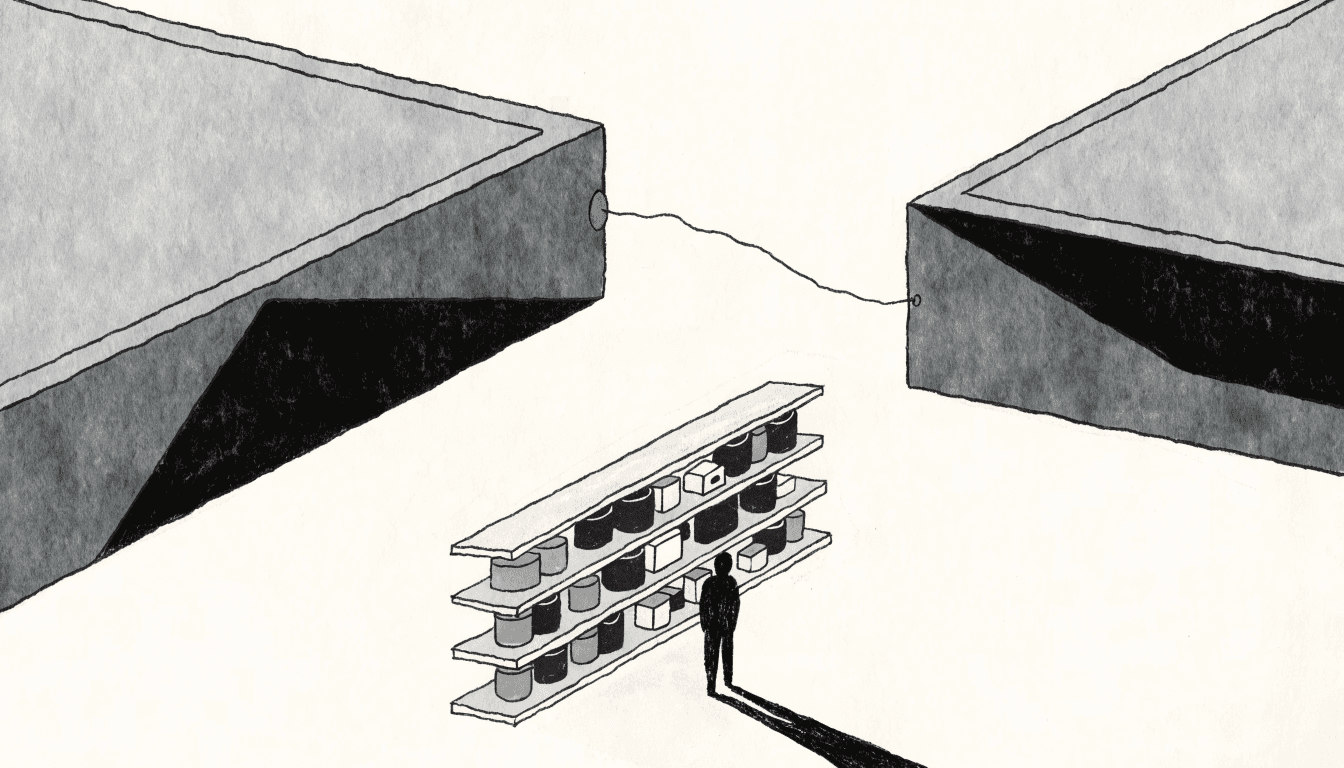
Illustration: two heavy geometric masses drawn apart, leaving a clean gap between them, with a slender thread still linking the two across it; below, a lone silhouetted shopper browses a plain, unbranded shelf of household goods.
Illustration by floortok.com

Mitsubishi Corporation has sold its entire stake in Ryohin Keikaku, the operator of MUJI, ending a shareholding relationship that dated back to 2001 — even as the two companies signed a new strategic business alliance the same week, according to Ryohin Keikaku's announcement.

Mitsubishi Corp had held roughly 3.9% of Ryohin Keikaku, or 21.566 million shares, making it one of the retailer's longest-standing outside shareholders; after the sale, its holding falls to zero, the company said. Ryohin Keikaku said the divestment currently has no material impact on its own financial results.

A deeper operating tie-up, not a clean break

Rather than unwinding the relationship, the two companies used the same announcement to sign a fresh strategic alliance covering joint product development and sales with Lawson, the convenience-store chain that is a Mitsubishi subsidiary; product-development support for Ryohin Keikaku's food business as it expands overseas; strengthened logistics functions and services; and the pursuit of new domestic and international business opportunities together, the companies said.

Capital out, commerce in

The split is a clean illustration of how a trading house can separate capital from commerce: Mitsubishi is giving up a legacy minority stake while doubling down on the parts of the relationship that generate ongoing business — supplying and co-developing product for Lawson, backing Ryohin Keikaku's overseas food push, and running logistics. For Ryohin Keikaku, it reads as confirmation that the commercial relationship, not the shareholding, was always the point.